Hi!
I just tried to add our new Always On HAG Cluster to Check_mk and noticed, that there is no check related to Availability Groups in the mssql.vbs provided by the agent. After some research I found the latest version of the mssql.vbs file in the official github repository, which now includes availability group handling: mssql_availability_groups: New service to monitor MSSQL availability groups (checkmk.com)
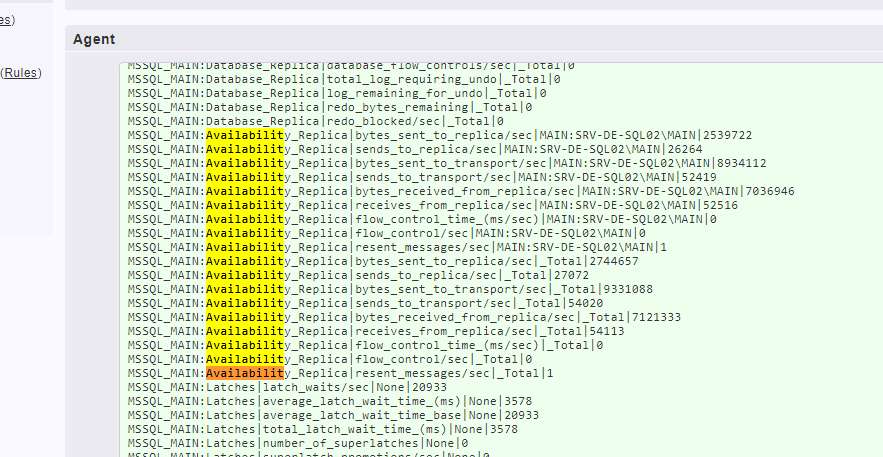
So I replaced the original vbs file with the new one, ran a connection test and found all the information i needed in the raw Agent output:
For example:
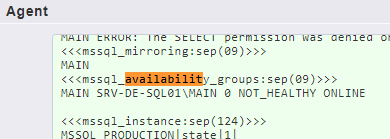
Problem is, they don’t appear in the Host Services for some reason. I can see all the other SQL related services, except from the new availiability features…
I even deleted the host and added it again. Am I missing something here?
This file is tagged with Checkmk Raw (CRE) Version 2.2.0i1
We are using Enterprise Edition 2.1.0p3. So maybe that’s the issue here. Is there something I have to add on the server side to get this to work?
I assumed, that check_mk only needs the output in a certain format and just creates a service with that information, but clearly something is missing.
Hope someone can help me 
Best regards
Julian